Wastewater process monitoring from influent to reuse
Connect each measurement to aeration, solids control, organic-load tracking, discharge verification or reuse—not to a generic instrument list.
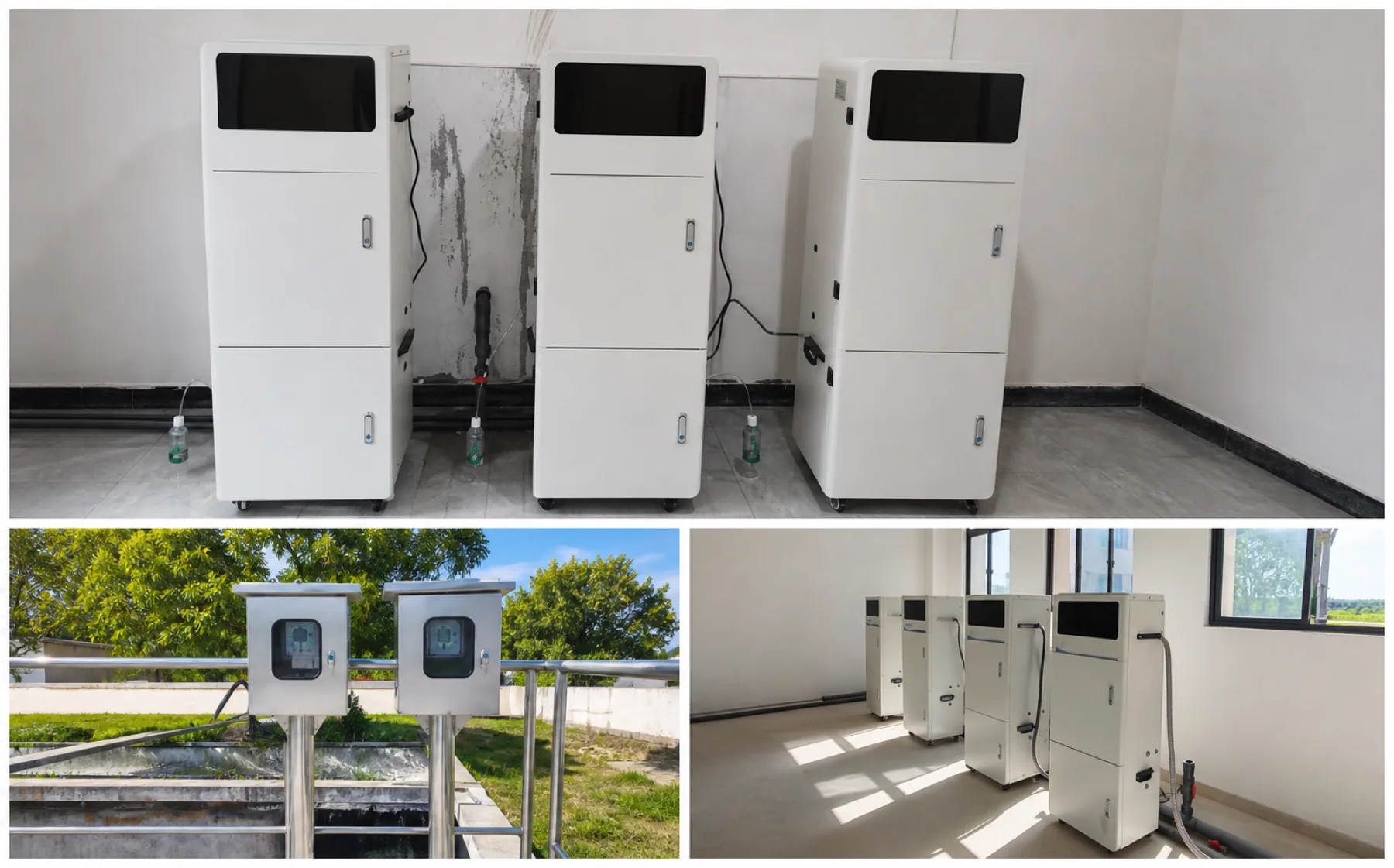
The system in one paragraph
For wastewater, define the control question at the influent, biological stage, clarifier, effluent and reuse point. Dissolved oxygen and suspended solids support biological-process control; pH, ORP, turbidity, ammonia and UV254-based organic-load measurement answer different questions. The final architecture must account for fouling, cleaning, representative installation and integration with the plant control system.
Inputs required before model selection.
Process stages
Influent, biological treatment, clarification, discharge and reuse
Common parameters
DO, MLSS/TSS, pH, ORP, turbidity, ammonia and UV254 COD correlation
Site conditions
Solids, fouling, immersion depth, flow, pressure, cable distance and cleaning access
Control purpose
Aeration control, process trending, alarms, discharge verification or sampling trigger
Connect each point to an operating decision.
Design the measurement, installation and data path together.
Separate control from reporting
A sensor used for aeration control may need different response, redundancy and maintenance than an effluent reporting point.
Design for fouling
Select installation hardware and cleaning access around biofilm, solids, grease and the plant’s realistic maintenance interval.
Confirm signal ownership
Document transmitter scaling, relay logic, Modbus mapping, panel responsibility and who will validate the data after commissioning.
Keep a verification path
Online data should be paired with the agreed site check, calibration or laboratory comparison procedure.
Compare technical pages after the duty is defined.
Fluorescence Dissolved Oxygen Analyzer
Online DO for wastewater, surface water and process monitoring with the installation confirmed per project.
View technical data ↗Suspended Solids / Sludge Analyzer
Wide documented concentration configurations for solids and sludge measurement.
View technical data ↗Wide-Range UV254 COD Analyzer
Reagent-free UV absorbance measurement with COD correlation configured to the application.
View technical data ↗Online Ammonia Analyzer
Integrated ammonia, pH and temperature measurement with optional potassium compensation.
View technical data ↗Automatic Water Sampler
Timed, proportional or triggered sampling when the project needs retained samples.
View technical data ↗Continue with selection guides and real project records.
Technical specifications come from model pages. Engineering context comes from focused guides. Project claims come only from the published case records linked here.
Selection guides
Optical DO for wastewaterChoose by process point, pressure, fouling, mounting, output and maintenance.↗Online MLSS and suspended solidsSeparate biomass, effluent solids and high-range sludge duties before selecting a model.↗UV254 COD analyzer selectionUnderstand optical path, correlation, solids, cleaning and site verification.↗Real project records
Dissolved oxygen monitoring projectsWastewater and drainage applications with searchable English project descriptions.↗Suspended-solids and sludge projectsReal project records covering wastewater, channels and industrial effluent.↗UV254 COD monitoring projectsPublished organic-load monitoring records with field evidence.↗Questions to resolve before quotation.
Which online measurements are most useful in biological wastewater treatment?+
Dissolved oxygen and MLSS are common process measurements, while pH, ORP and ammonia may add control context. The correct set depends on the process objective and available operator response.
Can UV254 replace a laboratory COD method?+
UV254 can provide continuous organic-load trends and a site-specific COD correlation, but it should not be presented as a universal replacement for the required reference method. Confirm calibration and verification for the actual water.
What installation details are needed before quotation?+
Provide process stage, normal and peak range, solids and fouling, temperature, pressure, flow, mounting, cable length, cleaning access, power, outputs, control system, quantity and destination.