Drinking-water monitoring from source to distribution
A practical measurement architecture for water-treatment plants, filter outlets, finished water and distribution networks.
The system in one paragraph
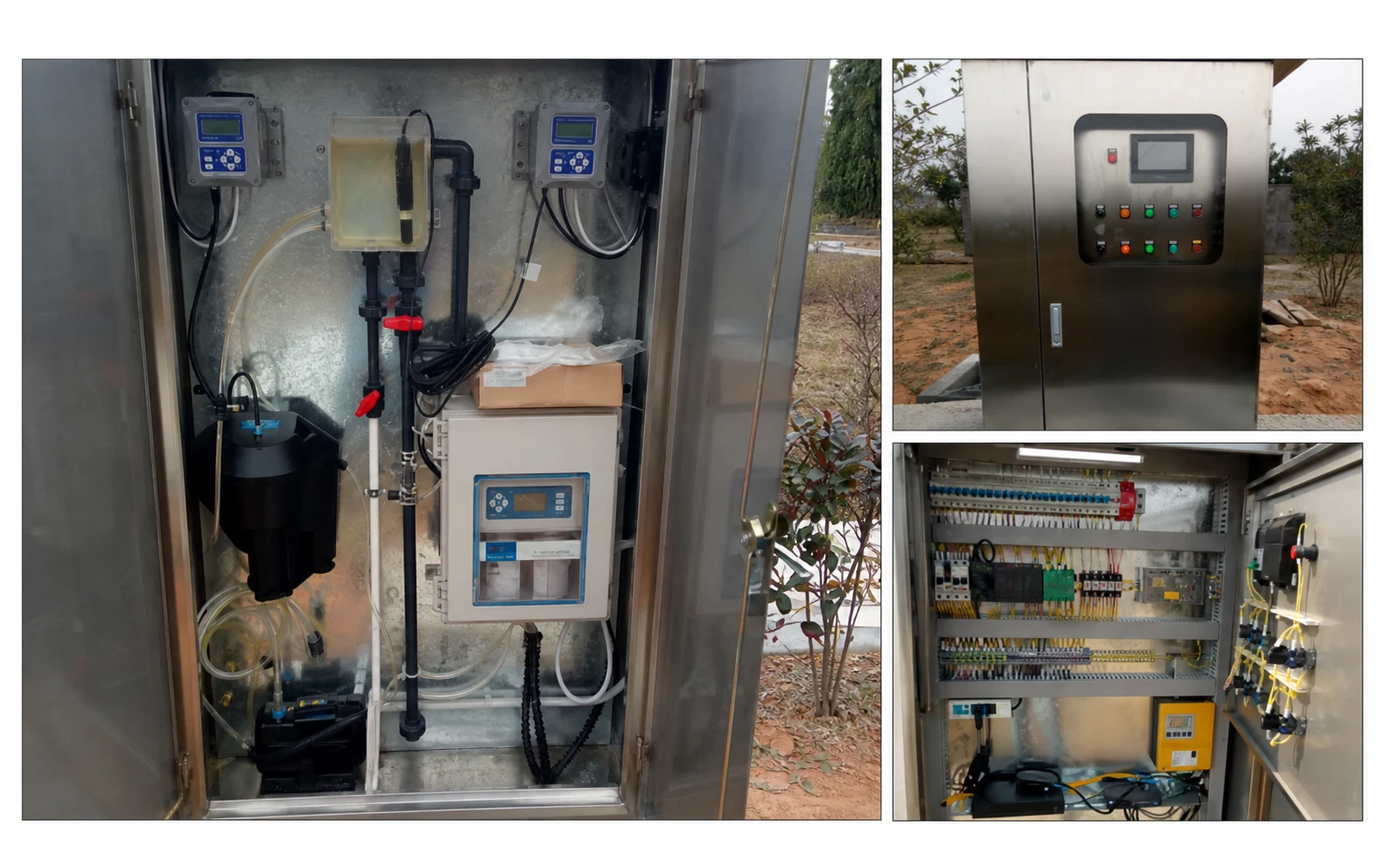
A drinking-water monitoring system should separate source-water variability, treatment performance, filter verification, disinfectant control and distribution-network stability. Define the decision at each point first, then select the documented parameter range, optical or electrochemical method, sample handling, cleaning and communications required at that location.
Inputs required before model selection.
Water points
Source, process, filter outlet, finished water and network
Common parameters
Turbidity, free or total chlorine, pH, conductivity, temperature and optional DO
System outputs
Local display, relays, 4–20 mA and Modbus RS485 by configuration
RFQ evidence
Normal and alarm ranges, sample flow, installation, control system and destination
Connect each point to an operating decision.
Design the measurement, installation and data path together.
Define each monitoring point
Use the operational decision—not a generic parameter list—to decide where continuous measurement is justified.
Match the sample presentation
Distinguish direct immersion from controlled flow-through measurement and document flow, pressure, drain and cleaning access.
Design the data path
Confirm local alarms, 4–20 mA scaling, Modbus registers, panel interfaces and how the site will review historical data.
Plan verification
Specify calibration or verification standards, inspection access, consumables and the operator responsible for routine checks.
Compare technical pages after the duty is defined.
Low-Range Online Turbidity Analyzer
Flow-through low-range measurement for filter outlet, finished water and clean-water duties.
View technical data ↗Compact Distribution Water Monitoring System
Compact multiparameter platform for configurable drinking-water and distribution monitoring.
View technical data ↗Free / Total Chlorine or Chlorine Dioxide Analyzer
Digital membrane measurement with the disinfectant configuration confirmed before quotation.
View technical data ↗Automatic Water Sampler
Automatic sampling and retention when a project needs traceable samples alongside online analyzers.
View technical data ↗Continue with selection guides and real project records.
Technical specifications come from model pages. Engineering context comes from focused guides. Project claims come only from the published case records linked here.
Selection guides
Low-range turbidity selectionConfirm optical method, expected NTU, sample flow, bubbles, cleaning and verification.↗Online chlorine analyzer selectionMatch the disinfectant, water chemistry, method and maintenance plan.↗Sampler and analyzer integrationPlan signals and sampling logic without assuming analyzer compatibility.↗Questions to resolve before quotation.
Which parameters are normally monitored in a drinking-water system?+
The list depends on the monitoring point and control objective. Common online measurements include turbidity, free or total chlorine, pH, conductivity and temperature, with other parameters added only when the process requires them.
Can one analyzer cover the treatment plant and distribution network?+
A common controller architecture may be possible, but the measurement method, range, sample handling and maintenance conditions must still be checked at each point.
What should be included in a drinking-water monitoring RFQ?+
Provide each sample point, normal and alarm ranges, disinfectant type, sample flow and pressure, installation, power, outputs, communication protocol, quantity, destination and required documents.