Microelectronic MEMS system with a documented special membrane structure
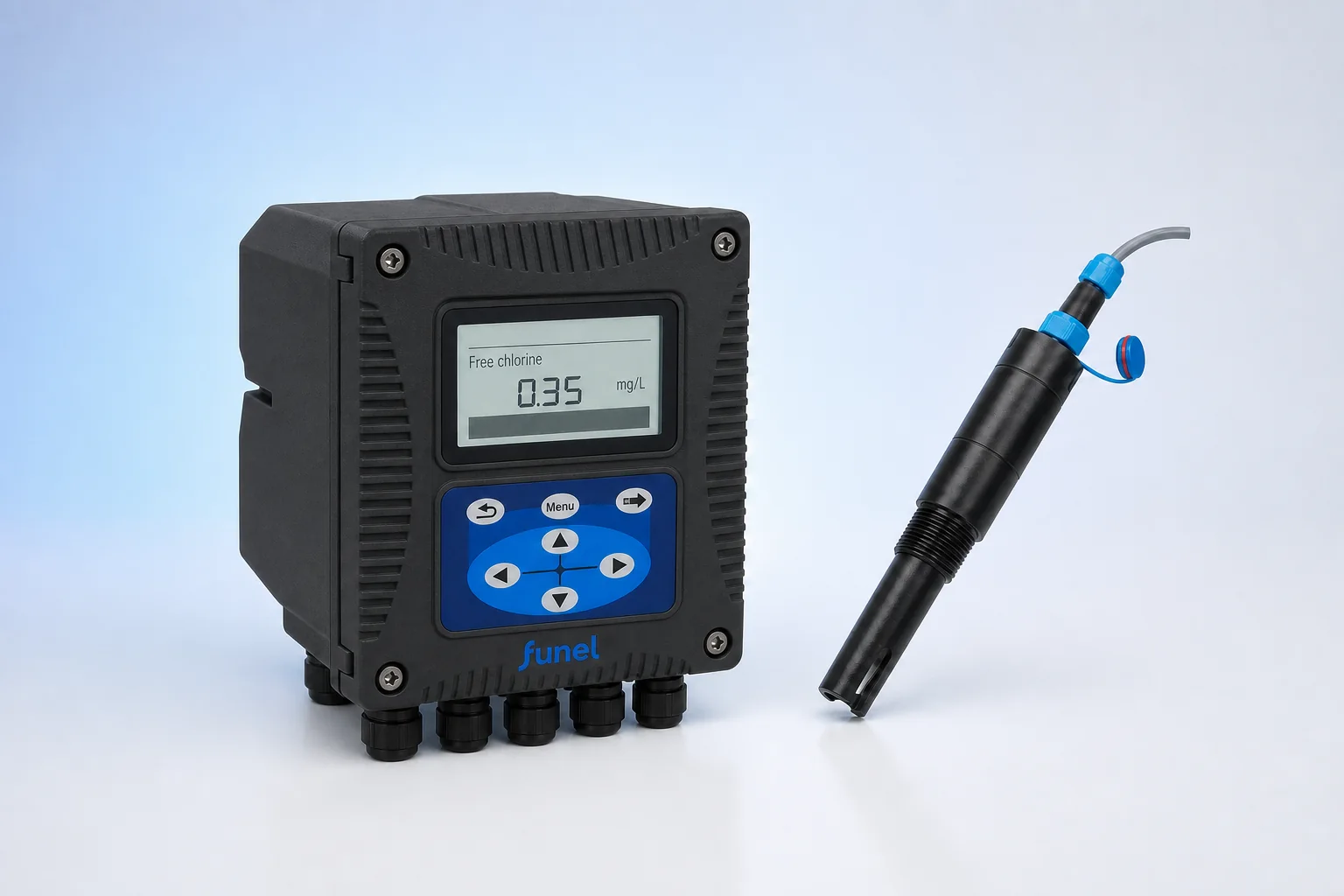
Micro-MEMS electrochemical analyzer · PDCL-500M
Free Chlorine / Chlorine Dioxide Analyzer
A compact electrochemical sensor for treated water, rural drinking-water and secondary-supply projects where conductivity and pH remain inside the documented limits.
0–2 / 0–5 mg/L0.01 mg/L≥100 µS/cm
Model-specific values checked against the supplied sheet
The five products retain separate principles, ranges, sample limitations and interfaces. Final configuration is controlled by the project confirmation document.
01
Measurement method and product highlights
0.01 mg/L resolution and less than 30-second response after polarization
Built-in PT1000 linear automatic temperature compensation
Requires conductivity of at least 100 µS/cm and is not intended for ultrapure water
Three 4–20 mA outputs, three configurable relays and Modbus RS485
02
Product technical specifications
Confirm the disinfectant, required free or total chlorine result, normal and peak range, sample pH, conductivity, temperature, pressure, flow-cell conditions, calibration method and control interfaces before quotation.
- Measurement system
- Microelectronic MEMS with special membrane structure
- Documented measurands
- HClO; ClO₂
- Measurement ranges
- 0–2 mg/L; 0–5 mg/L
- Accuracy at 25°C, pH 7.2
- ≤2 mg/L: ±5% of reading or ±0.03 mg/L, whichever is greater; 2–5 mg/L: ±5% of reading or ±0.25 mg/L, whichever is greater
- Resolution
- 0.01 mg/L
- Initial conditioning
- Soak in chlorinated water for 2 h, then power for 0.5 h
- Response time
- <30 s after polarization
- Minimum conductivity
- ≥100 µS/cm; not for ultrapure water
- Operating temperature
- 0–40°C, non-condensing
- Temperature compensation
- Built-in PT1000, linear automatic
- Maximum pressure
- 10 bar
- Recommended flow
- ≥10 L/h with a flow cell
- Sample pH
- pH 5–9; pH below 5 can damage the membrane
- Power supply
- 85–500 VAC; 9–36 VDC
- Analog output
- 3 × 4–20 mA
- Relays
- 3 configurable relays
- Communication
- Modbus RS485
- Cable
- 3 m standard; customizable
- Probe weight
- Approx. 210 g
- Thread
- NPT 3/4
03
Recommended process fit
Drinking-water treatment
Continuous disinfectant-residual monitoring at plant process and outlet points.
Distribution and secondary supply
Verify residual chlorine through distribution networks and secondary-supply facilities.
Cooling and process water
Support disinfectant control in circulating-water and industrial-water systems.
04
Items to confirm before quotation
Confirm the target and water matrix before choosing DPD colorimetry, constant-voltage amperometry, micro-MEMS or a covered-membrane electrode.
- 01Disinfectant and free chlorine, total chlorine, chlorine dioxide or active-oxygen target
- 02Normal, peak and alarm range plus required detection limit
- 03pH, conductivity, temperature, pressure and sample cleanliness
- 04Flow-cell conditions, calibration, reagent or membrane maintenance
- 05Power, 4–20 mA, relays, Modbus, quantity and destination
05
Project documents available on request
After receiving the operating conditions, we prepare the configured datasheet, flow-cell and mounting confirmation, I/O schedule and quotation. The clean image is not a dimensional drawing.
Get a quote- Configured datasheet→
- Sample and mounting confirmation→
- Cable and I/O schedule→
- Project quotation→
06
Compare other chlorine models
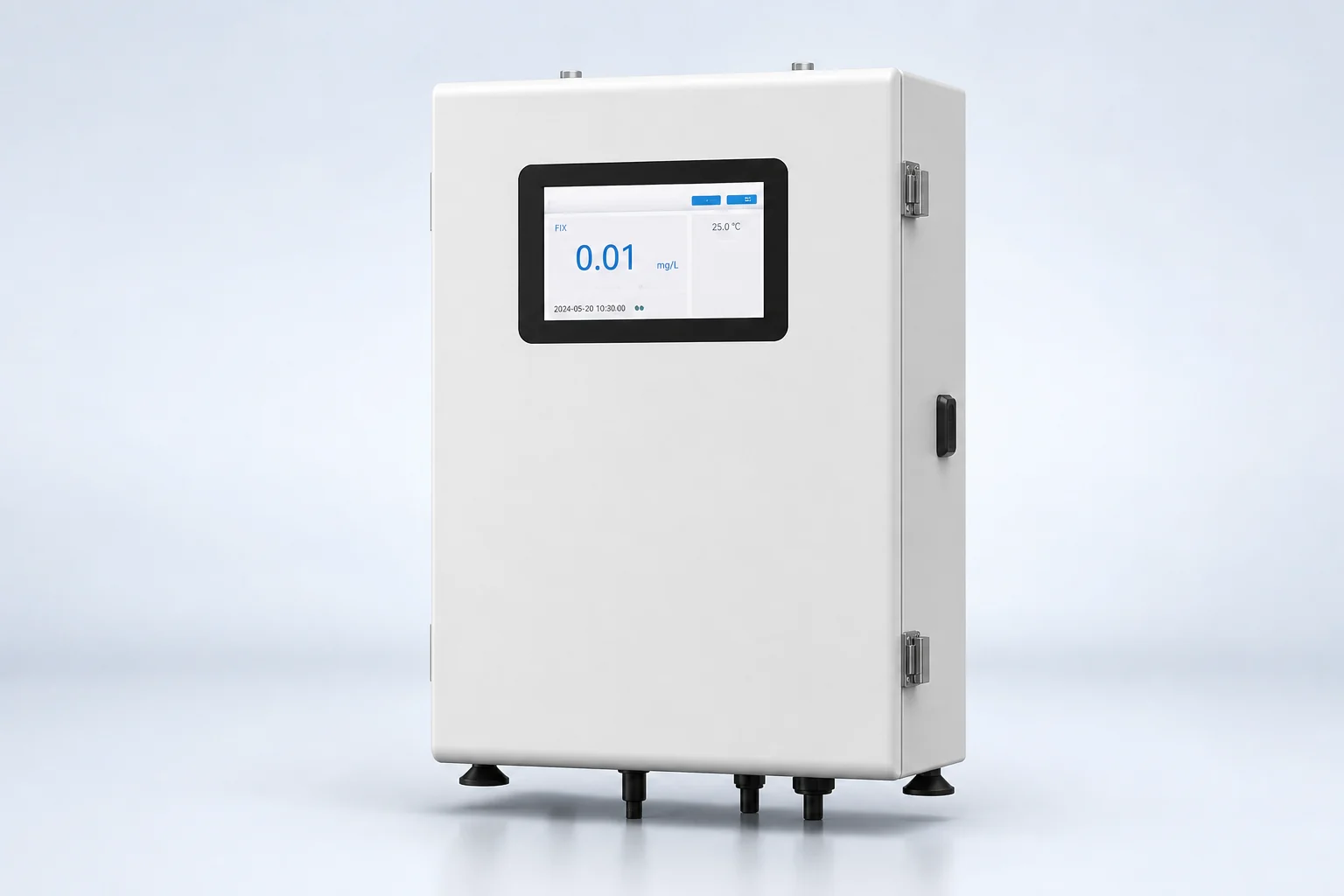
Free / Total Chlorine and Active Oxygen Analyzer
View product↗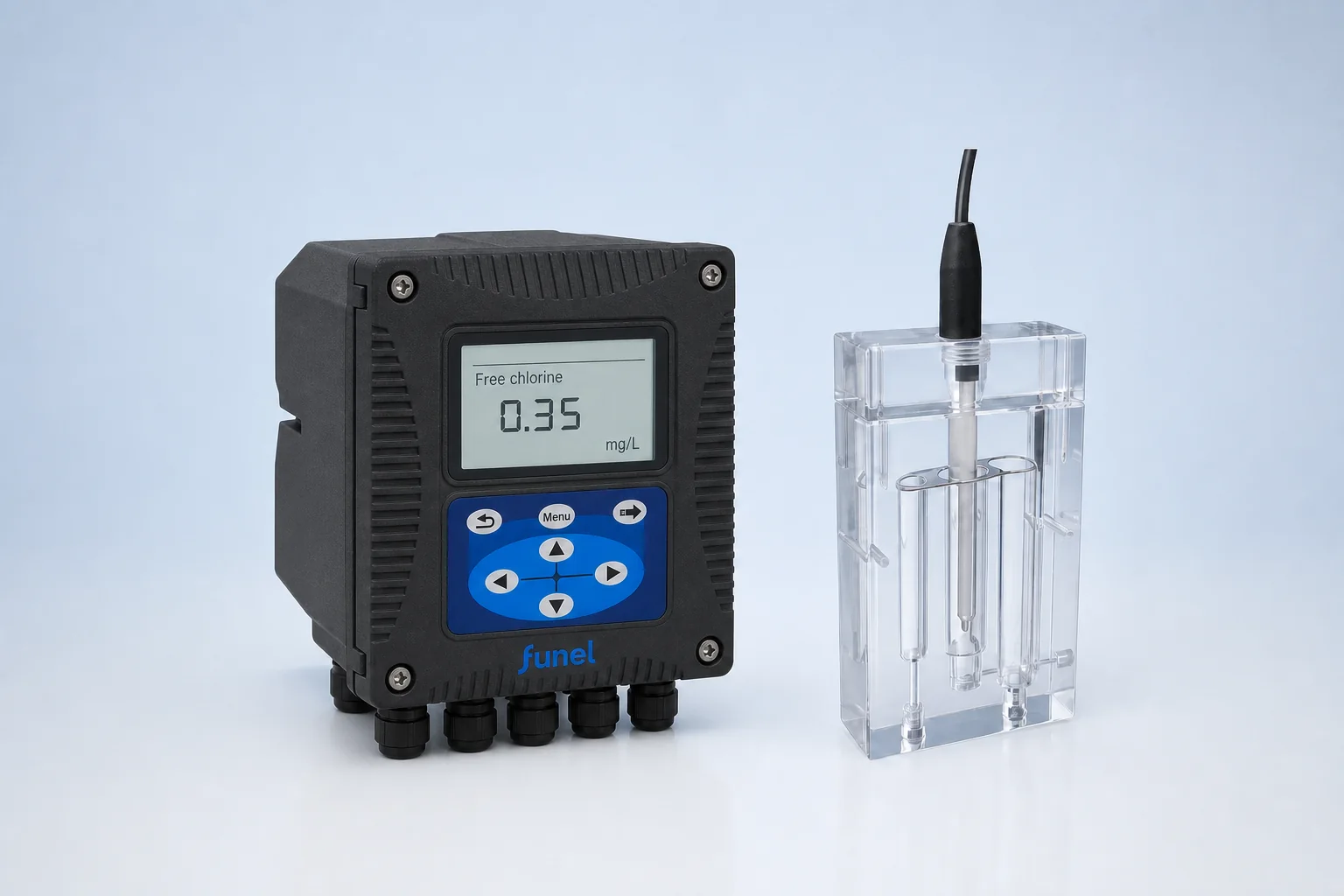
Free Chlorine / Chlorine Dioxide Analyzer
View product↗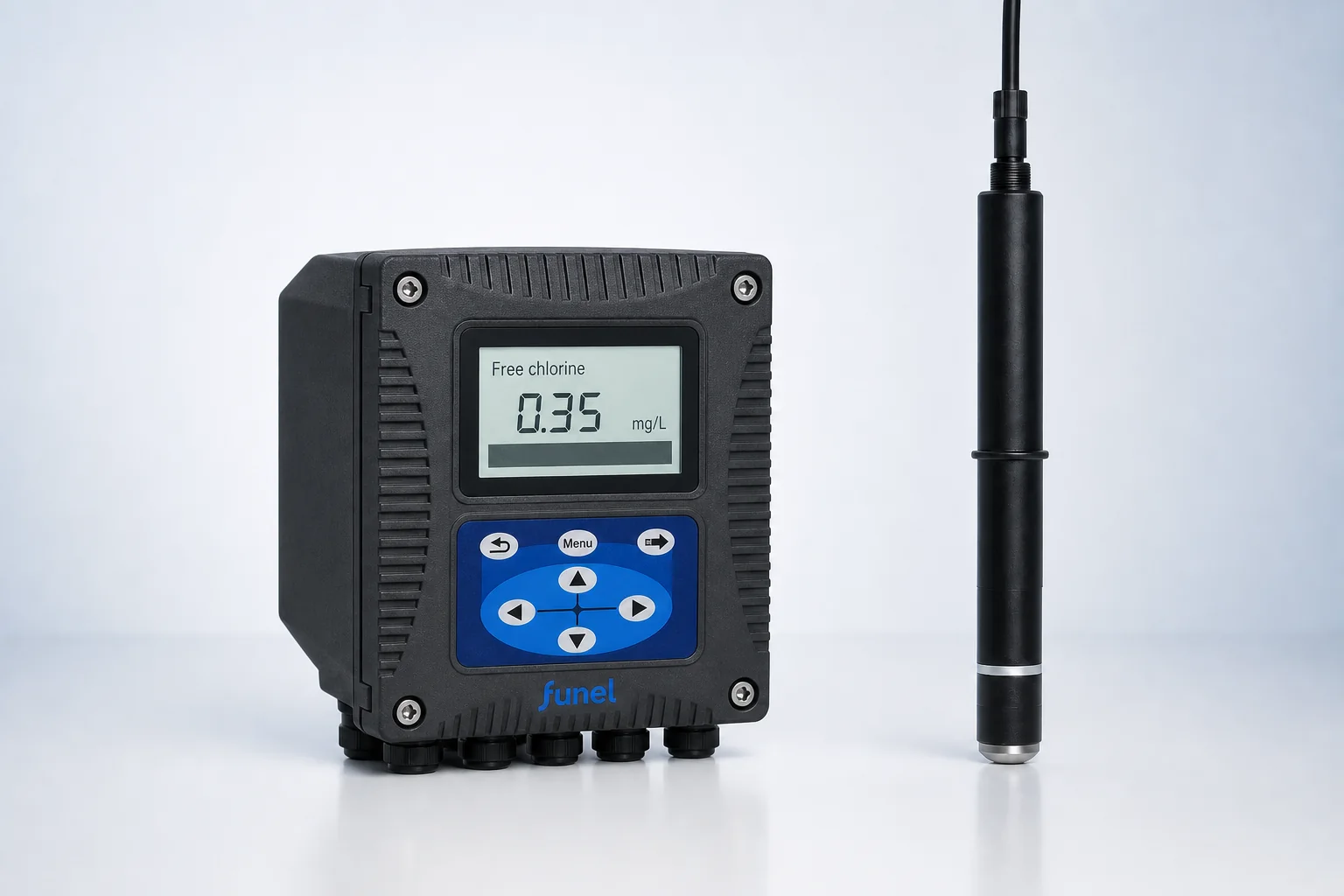
Online Free Chlorine Analyzer
View product↗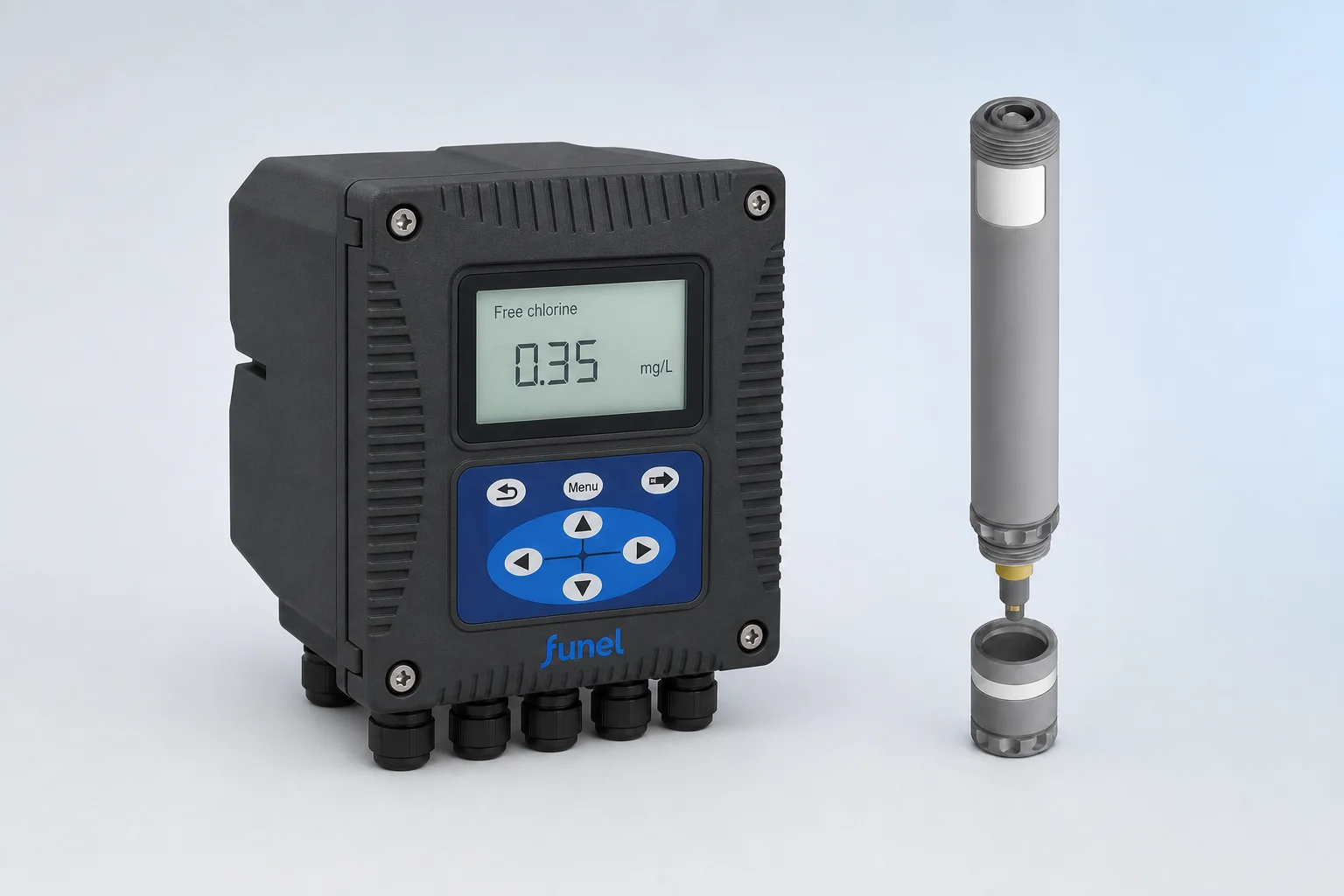
Free / Total Chlorine and Chlorine Dioxide Analyzer
View product↗07
Selection questions
Do all five analyzers use the same measurement method?+
No. CL-201 uses DPD colorimetry; PDCL-400 uses constant-voltage amperometry; PDCL-500M uses a micro-MEMS electrochemical structure; PDCL-700 and PDCL-600 use different membrane-electrode designs.
Can the model be selected only from the range?+
No. Confirm the disinfectant, free or total result, pH, conductivity, temperature, pressure, flow and maintenance method.
Can the product image be used as an installation drawing?+
No. The image provides consistent public presentation. Dimensions, interfaces, accessories and flow cells come from the datasheet and order confirmation.
Contact FUNEL
Tell us what you need to measure.
We will respond with a recommended configuration, supporting documentation and quotation.