How to choose dissolved oxygen monitoring for aquaculture
A practical guide to stable DO monitoring in fish ponds, tanks and recirculating aquaculture systems.
The selection in one paragraph
Aquaculture DO selection starts with the pond or tank layout, water type, depth, flow, temperature, expected range and alarm response. Choose a sensor that can be installed where the water is representative, cleaned safely and connected to the required display, relay or data system.
Confirm these conditions before choosing a model.
Freshwater, seawater or brackish water?
Confirm wetted materials and fouling conditions before selecting the sensor body and installation hardware.
Pond, tank, raceway or RAS loop?
The water movement and access plan affect response, mounting depth and cleaning frequency.
Is the value used for alarm, control or reporting?
Define the low-DO alarm, relay logic, data logging and response procedure before choosing outputs.
What are the normal and peak conditions?
Record temperature, immersion depth, pressure, cable length and seasonal changes.
How quickly will the sensor surface foul?
Plan inspection and cleaning around feed, algae, solids and the actual installation location.
Where will the DO value be displayed?
Confirm 4–20 mA, Modbus RS485, relay, local display, wireless or farm-control integration.
Match the DO setup to the aquaculture system
Why aquaculture depends on stable DO data
Fish and other aquatic organisms respond to changes in dissolved oxygen, while oxygen demand changes with stocking, feeding, temperature, biomass and water movement. A useful monitoring point therefore needs representative water and a repeatable maintenance routine.
The correct low-DO response may include aeration, oxygenation, water exchange or an operator alarm. The sensor should be selected together with that response path.
Aquaculture installation checklist
Place the sensor where it sees the water that matters to the stock and the control decision. Keep the sensor accessible for cleaning and protect the cable from damage.
- Confirm freshwater, seawater or brackish-water conditions
- Record pond or tank depth and temperature
- Avoid stagnant corners, direct bubbles and strong surface effects
- Check the optical cap and clean biofilm or deposits
- Set low-DO alarms and verify relay or data-system scaling
- Keep a calibration and inspection record
Choosing a FUNEL configuration
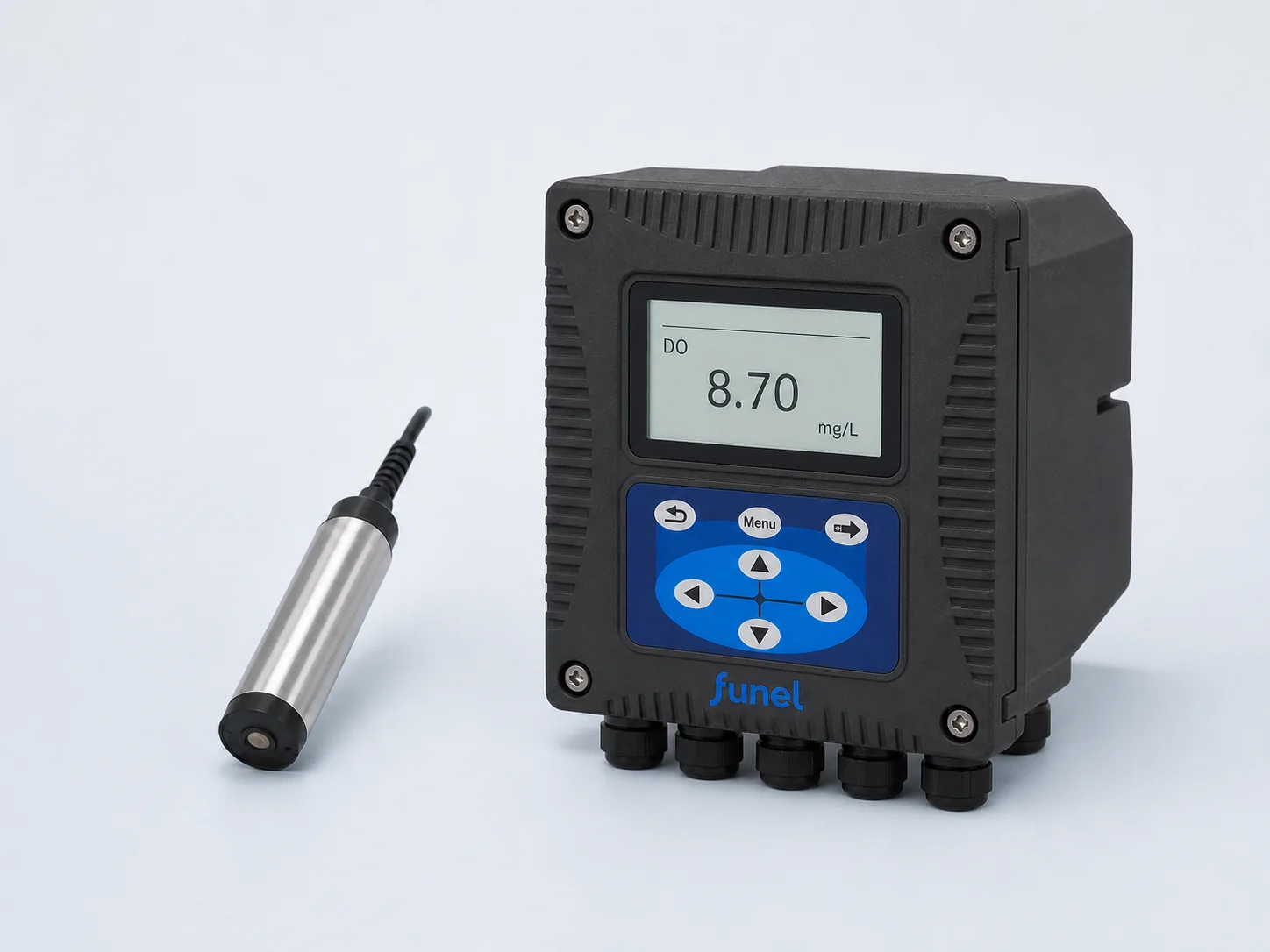
PFDO-500 is a useful starting comparison for compact aquaculture duties, while PFDO-600, PFDO-700 and PFDO-800 can be reviewed when installation, pressure, materials, output or project integration require a different configuration. Final suitability depends on the water and installation details.
Products to compare after the duty is defined.
Aquaculture Fluorescence DO Analyzer
A compact comparison point for low-pressure pond, tank and aquaculture monitoring.
View technical data↗Compact Fluorescence Dissolved Oxygen Analyzer
A compact online option when installation space and continuous monitoring need review.
View technical data↗Fluorescence Dissolved Oxygen Analyzer
A project-oriented configuration when display, outputs and system integration are required.
View technical data↗Dissolved oxygen project records
Review existing FUNEL dissolved-oxygen application records and use them as a starting point for your own configuration discussion.
Questions buyers ask before quotation.
Where should a dissolved oxygen sensor be installed in a fish pond?+
Use a representative location with sufficient water movement and safe access for cleaning. Avoid stagnant corners, direct air bubbles, walls and a point that only reflects the surface.
Does aquaculture DO monitoring need an alarm?+
Many systems benefit from a defined low-DO alarm and response procedure. Confirm the alarm threshold, relay or data output and who will respond before commissioning.
Can one DO model cover ponds and recirculating aquaculture systems?+
The same product family may cover both, but depth, pressure, materials, mounting, fouling, outputs and cleaning access must be reviewed for the actual site.