Dissolved oxygen measurement troubleshooting and selection guide
A practical, brand-neutral checklist for diagnosing DO readings and selecting an optical fluorescence analyzer for wastewater or aquaculture.
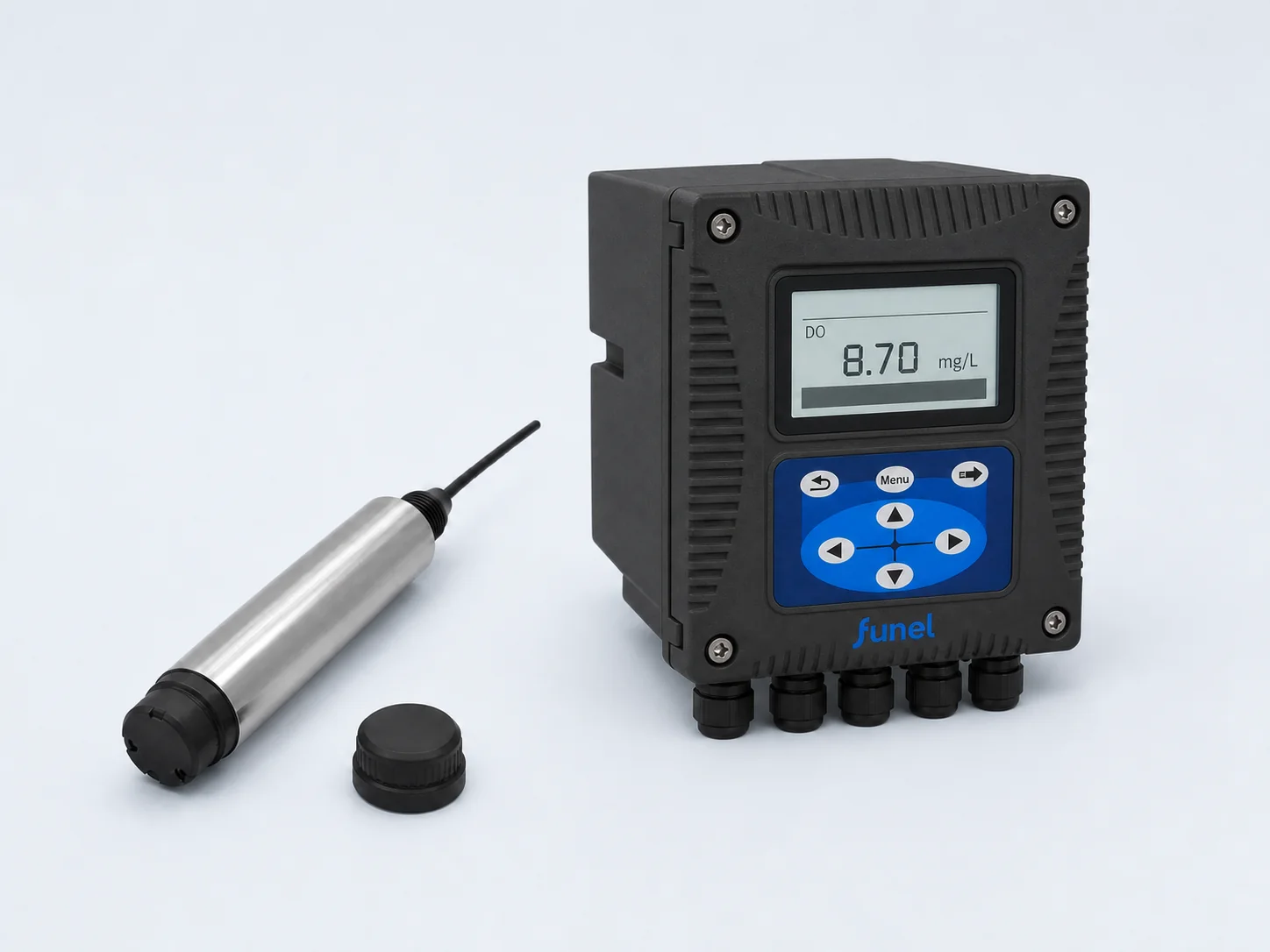
The selection in one paragraph
Start with the instrument and sensor condition, then check temperature, installation depth, water movement, fouling, calibration and signal wiring. A low or unstable reading can come from the process, the installation or the measurement chain. For wastewater aeration and aquaculture, define the real measuring point and control objective before selecting a model.
Confirm these conditions before choosing a model.
Is the reading different from a verified reference?
Compare with a recently checked portable meter or laboratory method, while recording temperature, location and sampling time.
Is the optical cap clean and undamaged?
Inspect for biofilm, scratches, trapped bubbles, loose parts, water ingress or a damaged cable before changing process settings.
Is the sensor seeing representative water?
Avoid dead zones, walls, direct air plumes and locations where settling solids or bubbles dominate the measurement.
Does the process explain the value?
Review aeration, mixing, loading, flow, temperature and recent chemical or biological changes before assuming instrument failure.
Are calibration and outputs consistent?
Check calibration records, temperature compensation, power, 4–20 mA scaling, Modbus values and controller alarms.
Is this wastewater, aquaculture or another application?
Confirm water type, pressure, depth, materials, range, maintenance access and communication requirements before quotation.
Separate the problem type before changing the instrument
Why an optical DO reading can be wrong
Fluorescence dissolved oxygen measurement uses an optical interaction between the sensing material and oxygen. It does not consume oxygen and does not require a membrane or electrolyte, but the installation still needs clean optics, representative water and correct temperature information.
When a value looks wrong, separate measurement-chain checks from process checks. Compare the displayed value, controller value and any portable reference before changing aeration or replacing a sensor.
A practical low-reading checklist
For a low reading, first verify the instrument and sensor condition. Then review whether the sample is representative and whether the process has enough oxygen transfer or mixing.
- Confirm calibration status and temperature reading
- Inspect the optical cap, cable and connector
- Check for biofilm, solids, trapped bubbles or water ingress
- Verify installation depth, mixing and distance from air diffusers
- Review aeration, organic loading, temperature and recent process changes
- Compare the transmitter output with PLC or SCADA values
A practical high or unstable-reading checklist
High or unstable values can be caused by air bubbles, changing water movement, electrical or communication issues, temperature errors or a fouled or damaged sensing surface. Keep a time-stamped record of the display, output and site conditions so the cause can be isolated.
Two buyer paths: wastewater and aquaculture
Wastewater buyers usually need representative mixed-liquor measurement, aeration-control integration and a maintenance plan. Aquaculture buyers usually need continuous monitoring in ponds or tanks, suitable materials, low-pressure installation and a clear alarm response.
Use the wastewater aeration guide and aquaculture guide below to narrow the application before requesting a FUNEL configuration review.
Products to compare after the duty is defined.
Fluorescence Dissolved Oxygen Analyzer
A project-oriented online configuration for wastewater, surface water and industrial process monitoring.
View technical data↗Fluorescence Dissolved Oxygen Analyzer
A model to compare when pressure, sensor body and installation conditions require review.
View technical data↗Compact Fluorescence Dissolved Oxygen Analyzer
A compact option for installations with tighter space or defined continuous-monitoring duties.
View technical data↗Aquaculture Fluorescence DO Analyzer
A dedicated comparison point for aquaculture and compact low-pressure monitoring.
View technical data↗Real dissolved oxygen monitoring projects
Review documented wastewater and drainage-network installations before finalizing a sensor configuration.
Questions buyers ask before quotation.
What should I check first when a DO reading looks wrong?+
Check the reference comparison, temperature, calibration status, optical cap, cable, installation position, bubbles, fouling and controller scaling before changing process settings.
Why can bubbles cause an unstable or high DO value?+
Air bubbles change the optical and hydraulic conditions around the sensing surface. Move the sensor to representative water and verify mixing, installation and cleaning conditions.
Can the same DO analyzer be used for wastewater and aquaculture?+
Sometimes, but the final choice depends on pressure, depth, water type, materials, mounting, fouling, range, outputs and maintenance access. Confirm the complete configuration before ordering.